Times retain their original basis. A browser timestamp, a witness estimate, and an expert-adjusted time are not interchangeable.
Download the chronology with qualifications (CSV)
After the Verdict: follow the civil cases and later developments ↗
OUR INTERPRETATION / THE READ RECORDHow we connect the events
Open or close the assessment
Selected records behind our assessment. The connections are our interpretation; overlapping times do not establish an order.
- 2022-01-29 · Around 12:32 a.m.Welcher described reverse travel at about 23 mph when the recorded interval ended.Disputed expert clock alignment
Time basis, limits & sources · E01
Disputed expert clock alignment
This is not a pedestrian-impact recording. A recorded reverse event does not, by itself, identify contact with a person. The recording endpoint is not a verified impact time or impact speed.
S02 / Boston.comS03 / Boston.comS21 / Boston.comS22 / Boston.comS43 / Boston.comS08 / Boston.comS46 / WCVB-hosted trial documentsS47 / WCVB-hosted trial documentsS19 / Boston.comS10 / Boston.comS36 / Boston.comS12 / Boston.comS24 / Boston.comS11 / Boston.comS30 / Boston.comS34 / Boston.comS29 / Boston.comS05 / Boston.comS13 / Boston.comS01 / Boston.com - 2022-01-29 · Around 12:32 a.m.Whiffin placed the last recorded overnight Apple Health activity at approximately 12:32 a.m.
Time basis, limits & sources · E02
Device data interpreted by expert
A lack of recorded activity is not a continuous observation of a person. Location uncertainty and the limits of activity logging must remain part of this record.
- 2022-01-29 · Around 5:07 a.m.Trial reporting describes Ring footage of Read reversing beside O'Keefe's parked Traverse and Welcher's contact analysis.
Time basis, limits & sources · E07
Video time reported in trial coverage; original clock not independently verified
The video is distinct from the expert's reconstruction of clearance and damage. The cause of the upper-taillight damage remained disputed. We have not independently authenticated the original footage or reproduced the geometry.
- 2022-01-29 · AfternoonWitnesses described damage in Dighton before the Lexus was towed to Canton.
Time basis, limits & sources · E09
Witness observations described in trial reporting
Pre-tow damage and the precise extent of that damage are separate questions. The witnesses did not give identical accounts. We have not independently authenticated the pre-tow vehicle condition from original images.
- 2022-01-29 · Approximately 5:35-5:45 p.m.The Dighton observations, Canton arrival, and first SERT recovery, with our assessment of the sallyport planting allegation.
Time basis, limits & sources · E10
Comparison of approximate witness-reported event times
The approximate ten-minute comparison begins at sallyport entry, not the beginning of police custody. It is not a synchronized stopwatch measurement. This analysis does not resolve earlier access, the later recoveries, or every allegation about evidence handling.
- 2025-05-16 · Testimony dateVallier described physical fits connecting recovered plastic to the damaged taillight.
Time basis, limits & sources · E11
Court-session date
The reported physical fits of larger pieces do not establish that the microscopic clothing debris mechanically matched the taillight. The reconstruction retained a gap. The reporting places receipt of the clothing at the lab on March 14, 2022; Vallier could not account for its storage before then. A laboratory comparison does not establish the earlier chain of custody.
Why these connections matter to us
Our view rests on three connections: the substantial reverse maneuver Welcher described, the final overnight phone activity Whiffin identified, and the recovered pieces Vallier fitted to the damaged taillight. We find these more persuasive together than any one detail alone. They link vehicle movement, the phone record and material associated with the Lexus, although they do not provide a recording of a collision.
The proposed timing is important to our view, but it is disputed. Placing the reverse event near 12:32 a.m. depends on the prosecution's clock alignment, which DiSogra challenged. The phone's timing and location also have limits. We consider the proposed overlap meaningful without treating it as an exact impact time or a complete account of John's movements. Several readings from one phone are not several independent witnesses.
The plastic is a separate reason for our view. Fitted edges give the larger recovered pieces a more specific connection to the Lexus than a resemblance in color. But fitting pieces together answers which assembly they came from, not when they broke or how they reached the lawn. The smaller clothing particles and their handling require their own scrutiny. We do not describe every particle as a unique physical match.
We also consider the damage reported before the tow. Barros's account weighs against an entirely intact taillight arriving in police custody. It does not tell us what caused the earlier damage, and he said a later photograph showed more damage than he remembered. Welcher's driveway analysis is relevant to the alternative explanation, but its geometry and suspension assumptions were challenged. Our conclusion depends on the wider record rather than treating either point as decisive.
The material challenge
The hardest objection is the injury evidence. Rentschler said the injuries and proposed movement did not support a Lexus strike. Laposata disputed a fall onto the lawn as the explanation for the head wound. The medical examiner left the manner of death undetermined. These are substantial problems for a confident reconstruction, not details we can dismiss because they conflict with our view.
The investigation creates another serious difficulty. Hartnett's tested vehicle areas did not yield a positive blood result. Collection and custody problems limit what later laboratory results can establish. Proctor's documented misconduct also gives readers a reason to scrutinize the investigators' decisions and accounts. We cannot make those problems disappear by pointing to a matching fragment.
Our belief does not establish intent, a precise impact time or speed, every movement after contact, or guilt of an offense. Karen Read was acquitted of the death-related charges. We keep that outcome, the strongest contrary testimony and the unresolved gaps alongside our assessment.
Why the phone sequence matters to us
What stands out to us is the sequence after arrival: the last recorded steps, no further recorded Apple Health activity until morning, and a battery that cooled overnight. We find that harder to reconcile with John entering the house with his phone and later being moved outside. But that reasoning depends on how much movement the phone actually recorded.
This is our interpretation of the combined evidence. It depends on how completely the phone recorded movement and how accurately it can be located. Logging delays and location uncertainty prevent us from treating this sequence as proof of physical impossibility.
The material challenge
Whiffin's tests showed that movement could be logged after a delay. Some location readings were also too imprecise to distinguish the lawn from the house.
The phone in Whiffin's freezer test cooled differently from John's phone. A falling battery temperature cannot, on its own, tell us where a phone was.
Our response
The gap matters to our view, but it is a gap in recorded activity. We cannot use it to prove that the phone never moved or that entering the house was physically impossible.
The Google search: 6:24 a.m. or 2:27 a.m.?
Hyde and Whiffin placed the Google search, "hos long to die in cold," at 6:24 a.m. Their explanation is that a browser-tab record can pair an earlier tab time with the last page used in that tab. Whiffin's tests show that this time relates to when the tab took focus. It is not necessarily the time the search was typed. That is why they did not read 2:27 a.m. as the time of this query.
Hyde also testified that McCabe did not manually delete this search. She explained that a temporary database log can hold records as the phone updates its data. Finding a search there, or seeing it labeled "deleted" by forensic software, does not by itself show that someone deliberately erased it.
The material challenge
Green's first-trial analysis placed the search at or before 2:27 a.m. and described the artifact as deleted. He disagreed that it was the same search recorded at 6:24 a.m.
On cross-examination, Hyde acknowledged her report did not identify a definitive reason for that artifact's precise 2:27:40 timestamp.
Our response
We find the later-search explanation more convincing because it accounts for the browser's behavior and the other traces of the search, rather than relying on one timestamp. That supports our reading of this search; it does not tell us how John died.
The no-manual-deletion statement is Hyde's conclusion about this search, not a finding that McCabe never deleted other information. We have not independently examined the phone extraction.
Read the search record & sources ↗Test these connections
Court outcome Read was acquitted of the death-related charges and convicted of operating under the influence. Read the verdict
Read our full interpretation ↗- E18 / Video described in testimony
Bar footage and departure
Bukhenik used surveillance footage to describe Read and O'Keefe's evening in Canton.
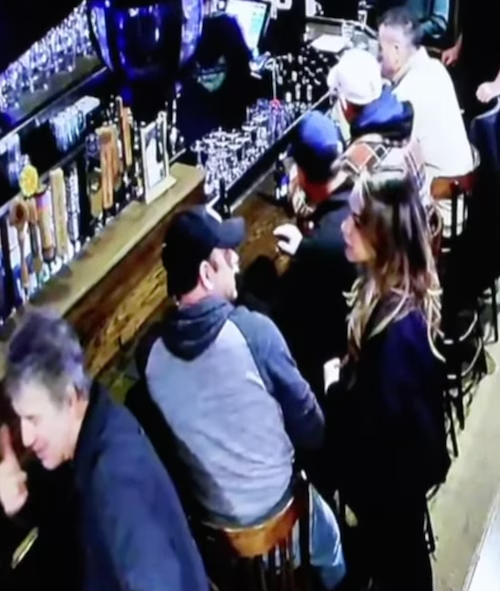
The bar layout is consistent with the C.F. McCarthy's setting in the cited courtroom reporting. We include this still as context for the evening's chronology. Its exact time and original recording have not been independently verified. A single frame does not establish how much anyone drank, their state of mind, or what happened later. - E22 / Witness testimony
Directions and arrival at Fairview
McCabe described giving O'Keefe directions and expecting him to join the gathering.
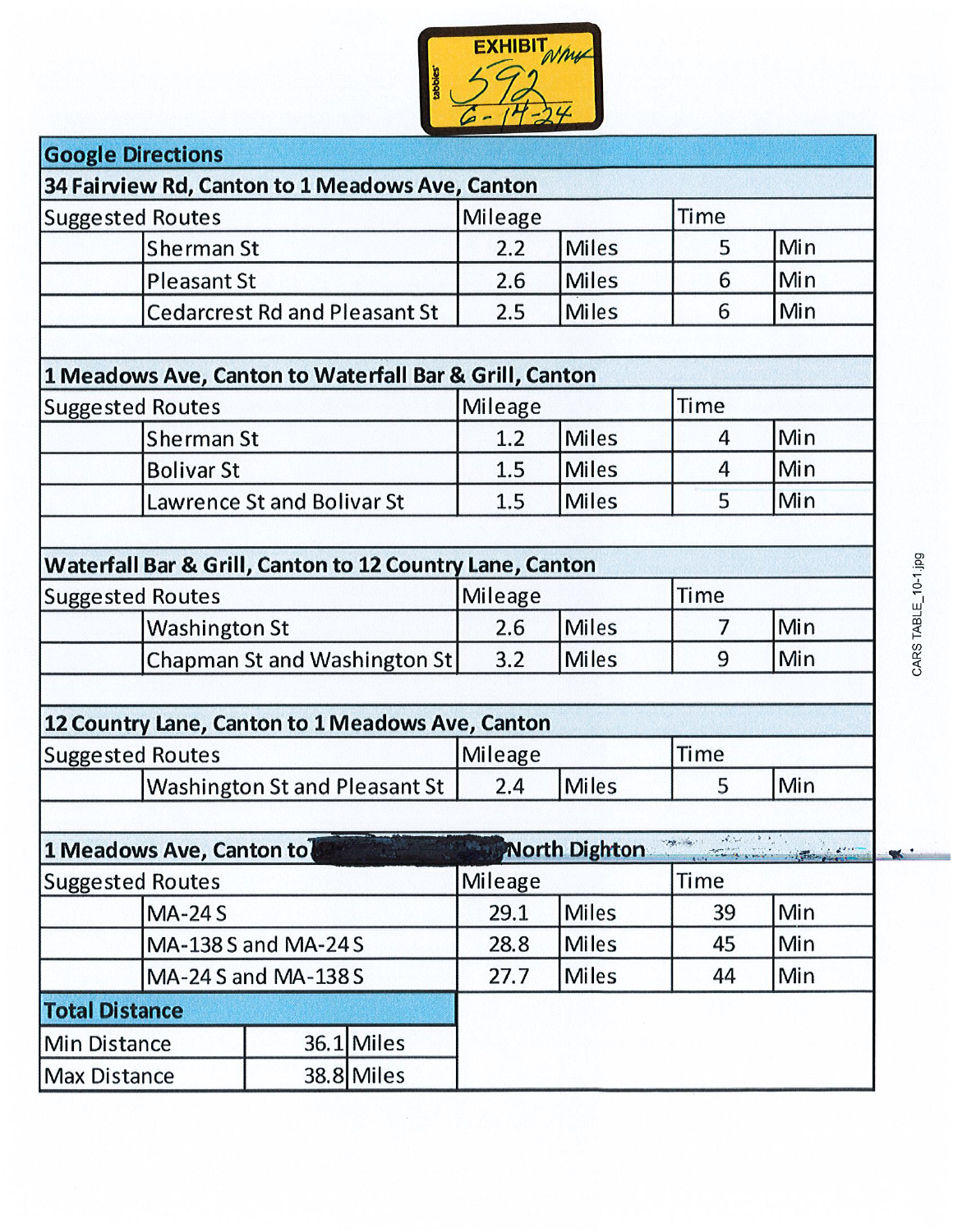
2024 exhibit 592 lists suggested routes, distances and estimated travel times. We show the table as route context, retaining its published redaction. These are route estimates, not GPS traces, proof of the route actually driven, or verified arrival times. - E04 / Witness testimony
McCabe's arrival messages
McCabe described sending arrival and parking messages while seeing a dark SUV outside the house.
- E01 / Expert interpretation
The recorded reverse maneuver
Welcher described reverse travel at about 23 mph when the recorded interval ended.
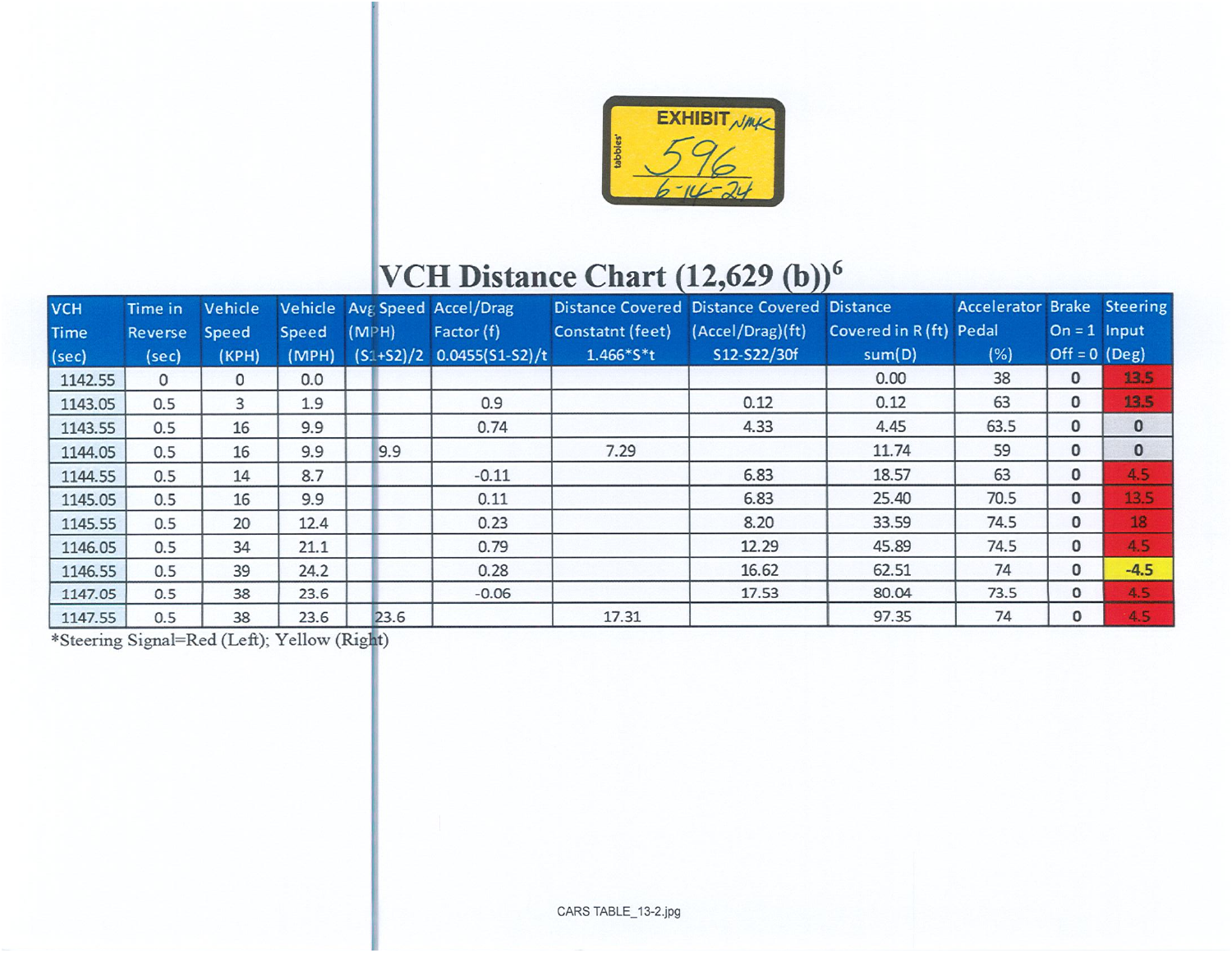
2024 exhibit 596 is a distance-calculation table, with a displayed cumulative reverse total of 97.35 feet. It is shown for comparison with the later testimony. This is not an independently verified travel distance, an impact recording, or the 2025 Welcher exhibit whose reverse-only interval remains unresolved here. - E02 / Expert interpretation
O'Keefe's final overnight Apple Health activity
Whiffin placed the last recorded overnight Apple Health activity at approximately 12:32 a.m.
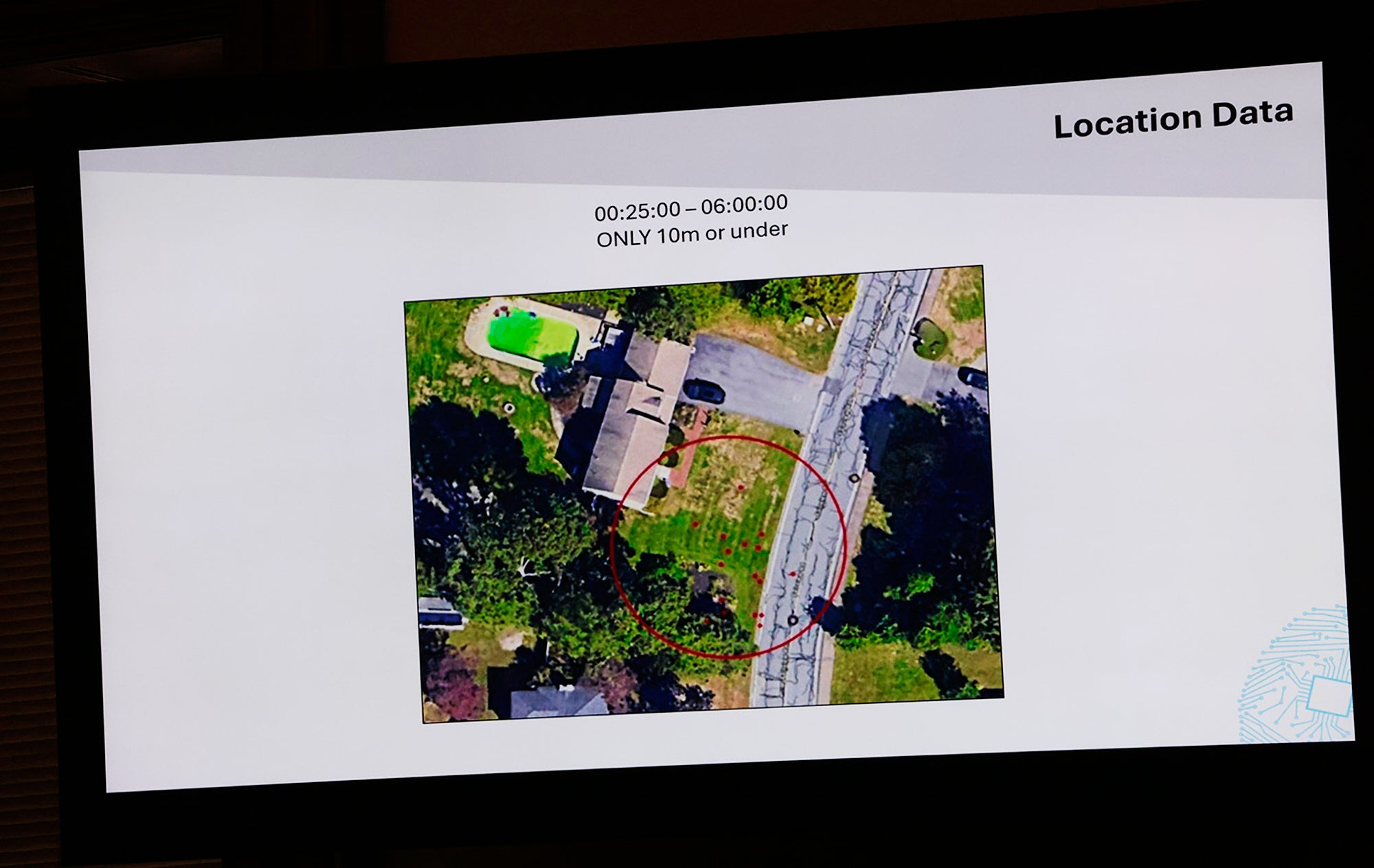
Courtroom photograph from April 28, 2025, showing a location-data slide discussed during Whiffin's testimony. The slide limits its plotted coordinates to a stated accuracy of 10 metres or under. We show that selection alongside the record's accuracy limits; it is not the complete phone history or proof of a precise position. - E06 / Recorded communications
Overnight calls, texts, and voicemails
Jurors heard voicemails and were shown messages sent after O'Keefe stopped responding.
- E05 / Recorded communications
Read's phone reconnects to home Wi-Fi
Trial reporting places a connection to O'Keefe's home Wi-Fi at approximately 12:36 a.m.
- E03 / Expert interpretation
The phone battery-temperature record
Whiffin described the battery cooling from about 72 F at 12:37 a.m. to 37 F at 6:14 a.m.
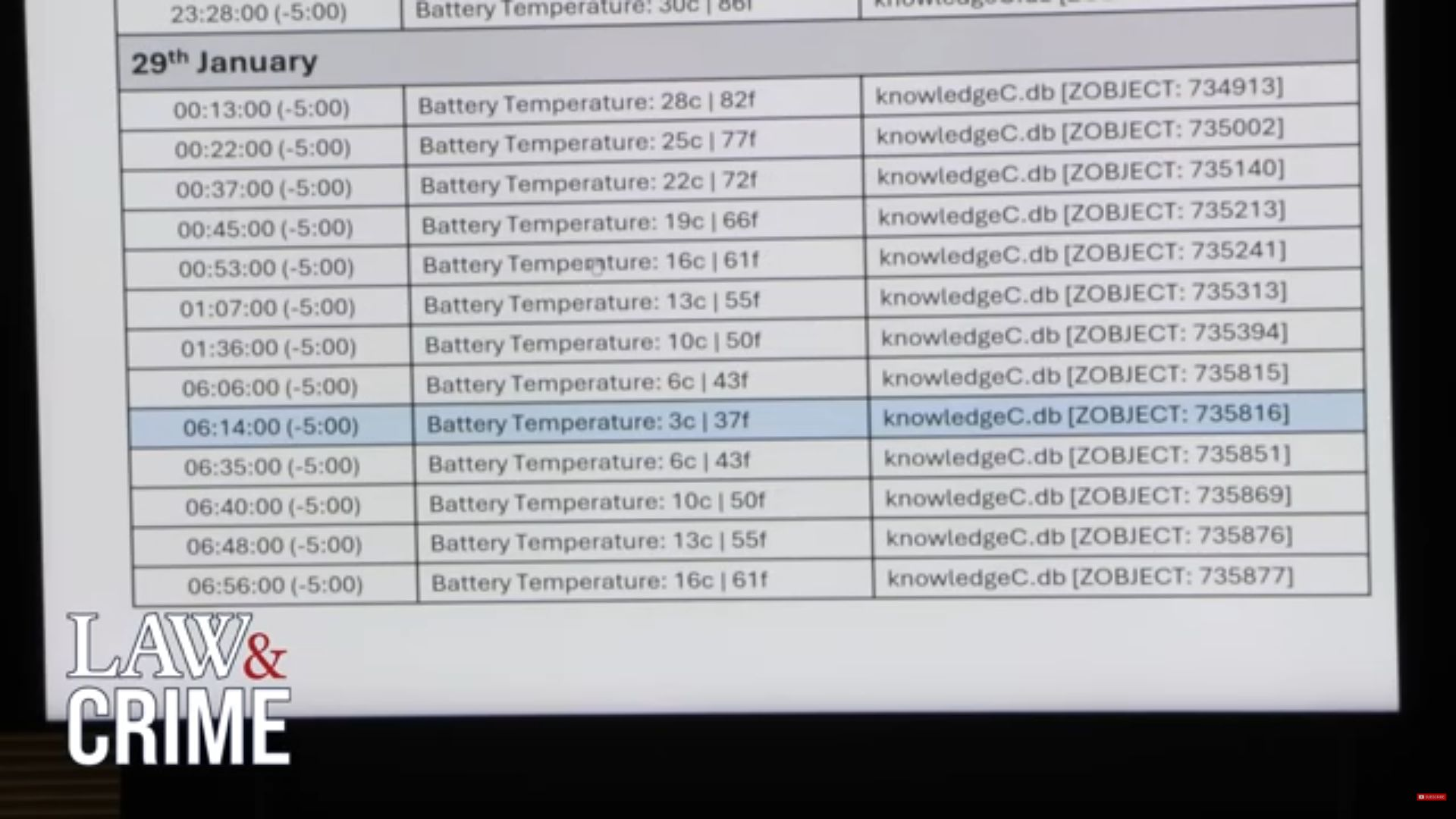
The January 29 battery-temperature table shown during Ian Whiffin's April 28, 2025 testimony. It lists 72 F at 12:37 a.m., 50 F at 1:36 a.m., 43 F at 6:06 a.m. and a low of 37 F at 6:14 a.m., followed by higher readings. No readings are shown between 1:36 and 6:06 a.m.; we cannot fill that gap with a continuous cooling claim. These are internal battery readings, not air or body temperatures, and do not independently establish where the phone was. The blue highlight belongs to the presentation. - E33 / Witness testimony
The snowplow driver's observations
Loughran described passes through the area and not seeing a body during an earlier pass.
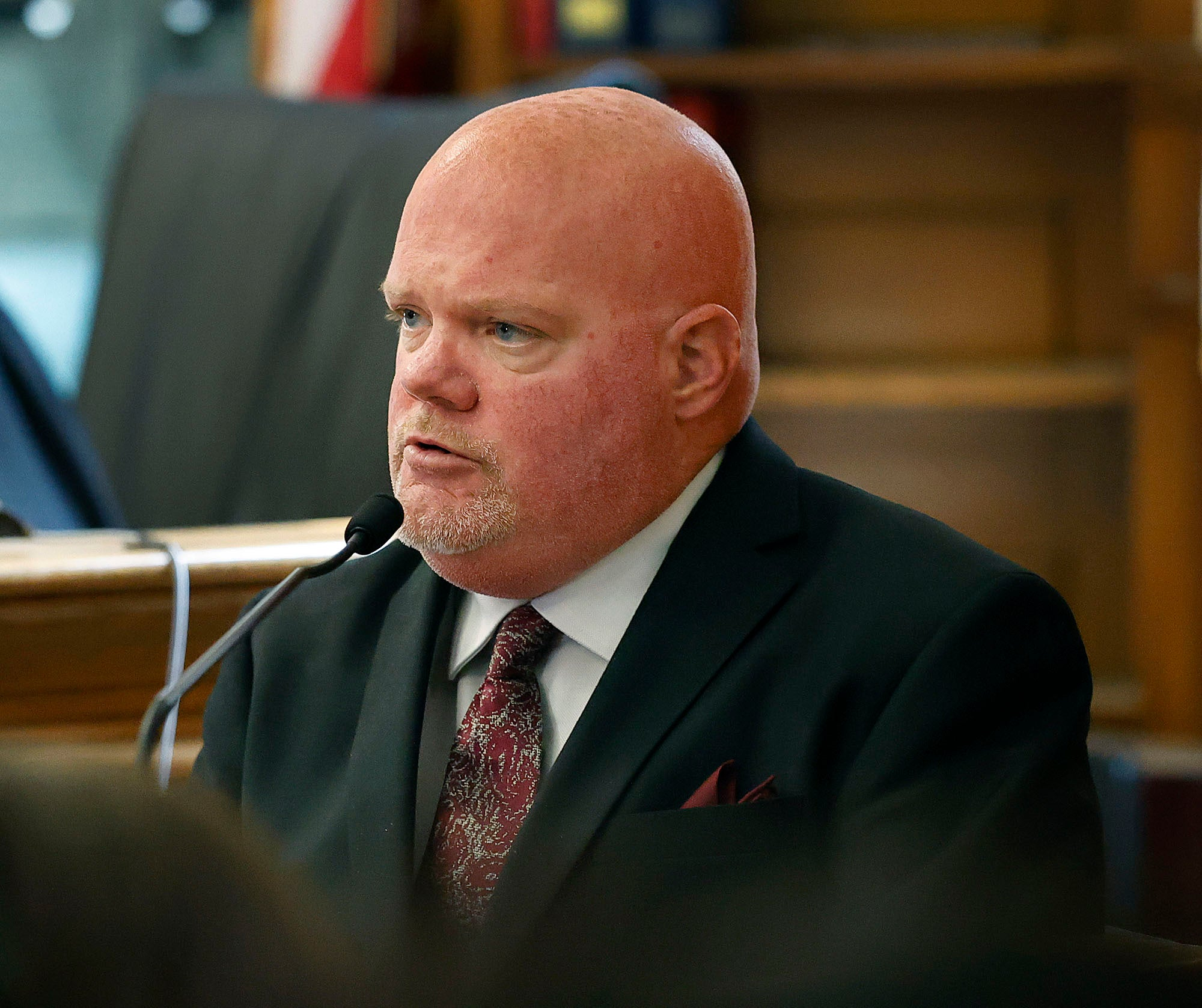
Brian Loughran testifying on June 4, 2025. We use the later courtroom photograph to identify the account discussed here. It does not show the overnight plow route, corroborate the estimated pass times, or establish which vehicle was outside the house. - E24 / Witness testimony
The early-morning calls to friends
McCabe and Roberts described calls from Read before O'Keefe was found.
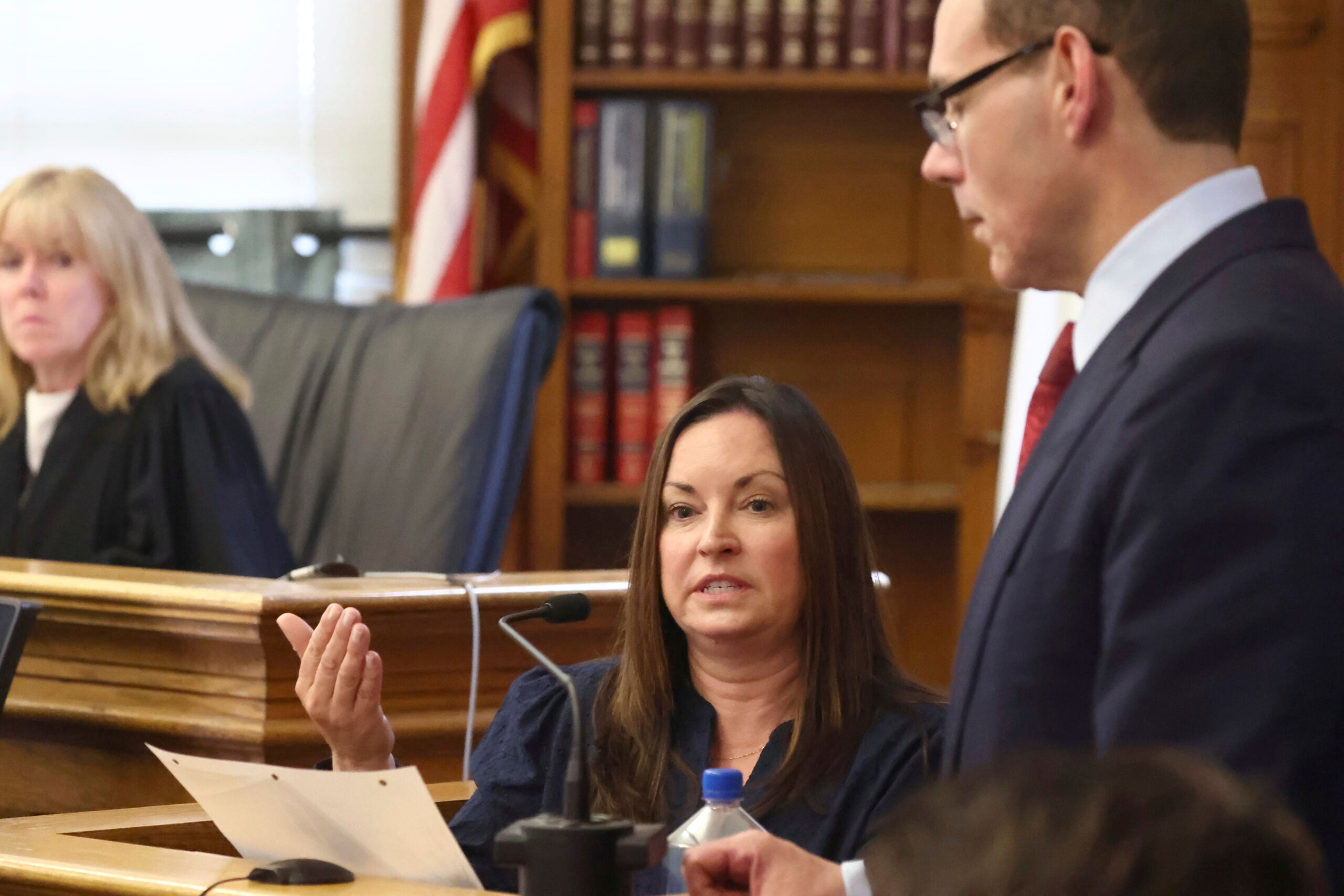
Kerry Roberts being questioned on April 22, 2025. We place this later testimony photograph beside her account of the early-morning calls. It does not show a January 2022 call, establish its exact words, or resolve differences between accounts. - E07 / Video with expert analysis
The driveway contact on Ring video
Trial reporting describes Ring footage of Read reversing beside O'Keefe's parked Traverse and Welcher's contact analysis.
- E25 / Recorded communications and testimony
Discovery, 911 call, and attempted aid
The women found O'Keefe on the lawn, and the jury heard the ensuing emergency call.
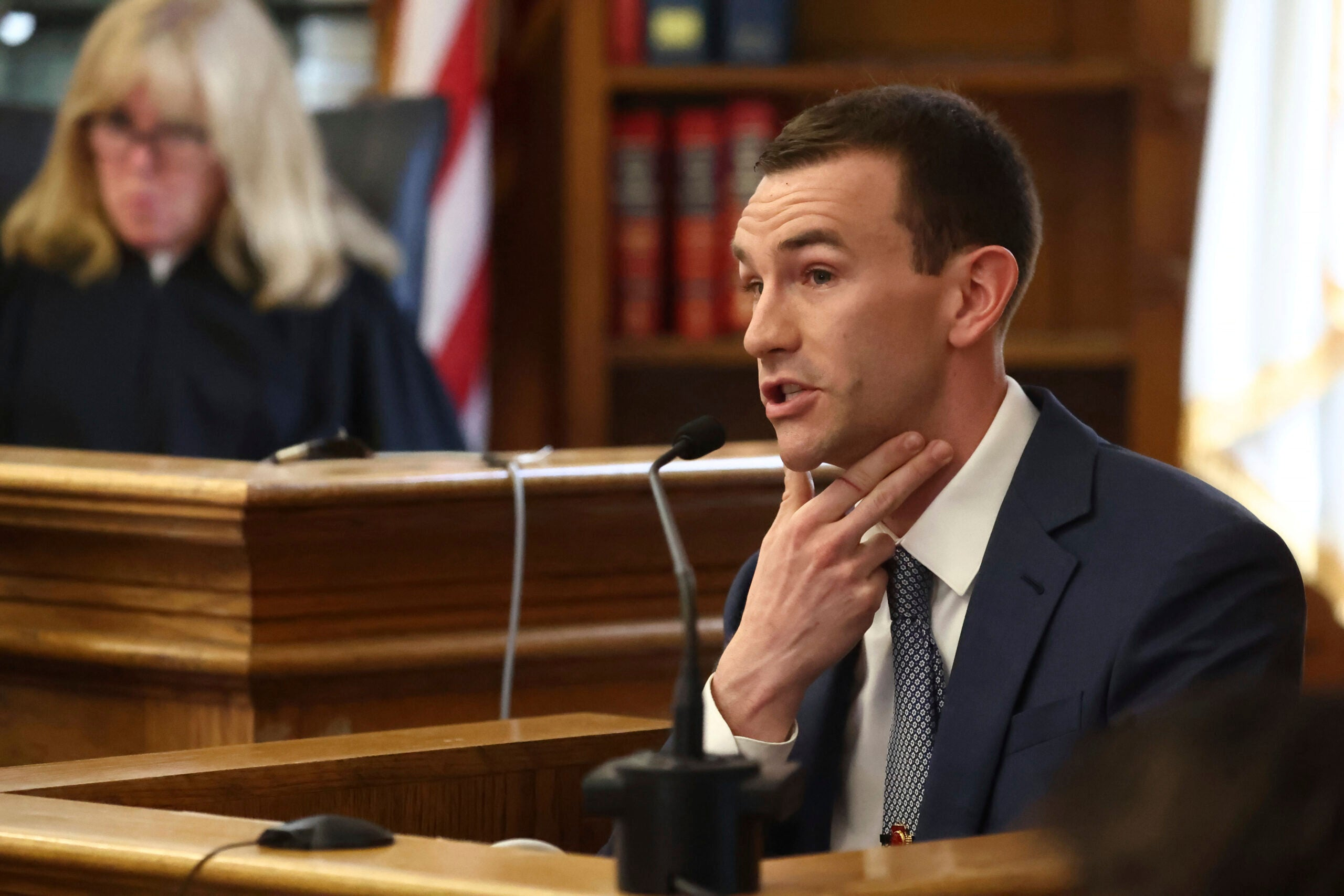
Paramedic Timothy Nuttall demonstrates checking a carotid pulse during testimony on April 22, 2025. We include the courtroom demonstration as context for the emergency-response account. It is not a photograph of aid being administered to O'Keefe or an independent record of the discovery time. - E08 / Disputed witness testimony
Statements reported by first responders
First responders attributed affirmative statements about hitting O'Keefe to Read.
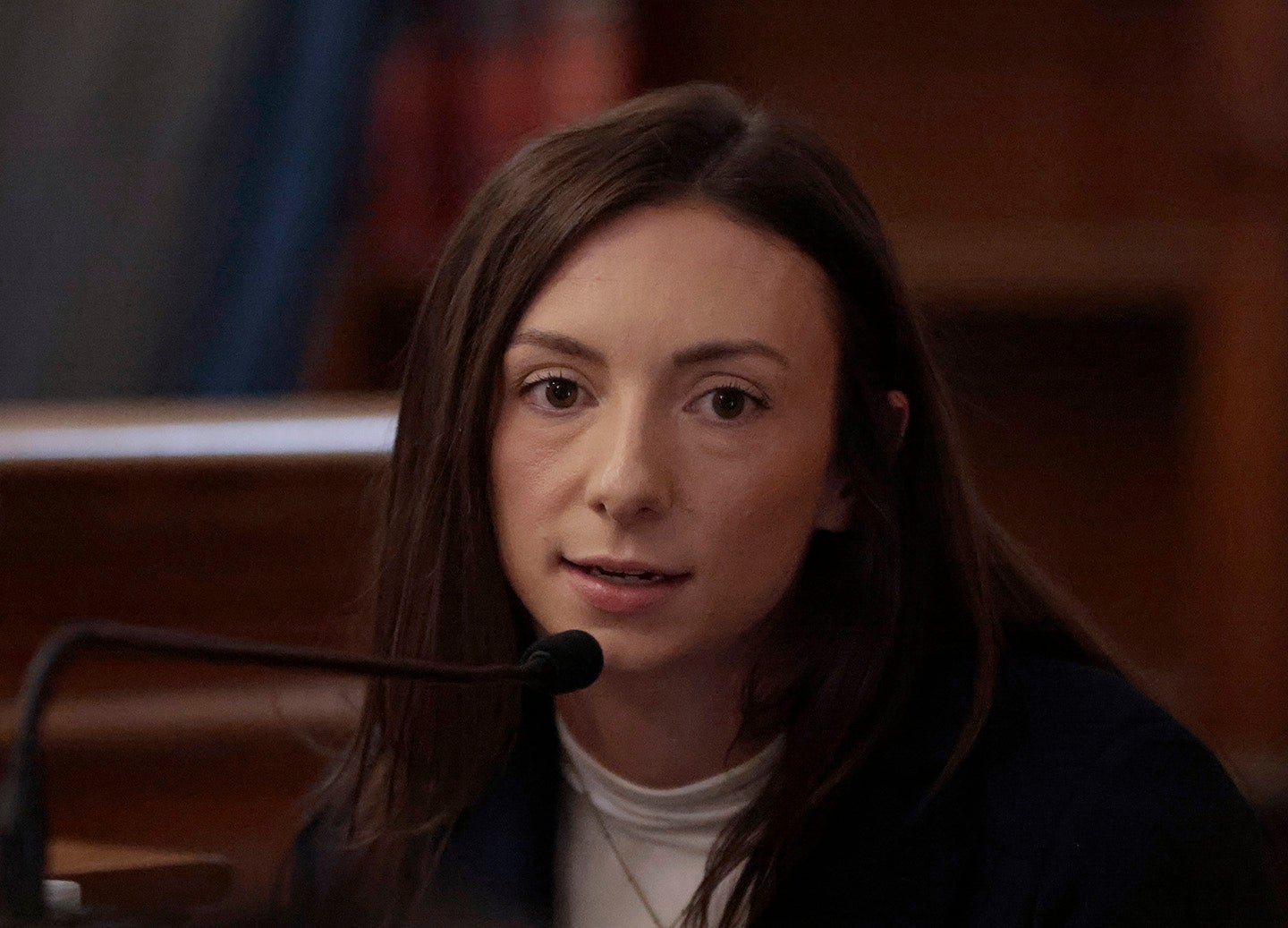
Katie McLaughlin testifying on May 5, 2025, in the retrial. This later courtroom photograph locates the source of one first-responder account. We do not treat it as a recording of the January 2022 words or as evidence that one recollection is more reliable than another. - E26 / Laboratory result and expert calculation
Hospital alcohol testing and extrapolation
Knowles estimated an earlier blood-alcohol range using a later hospital serum result.
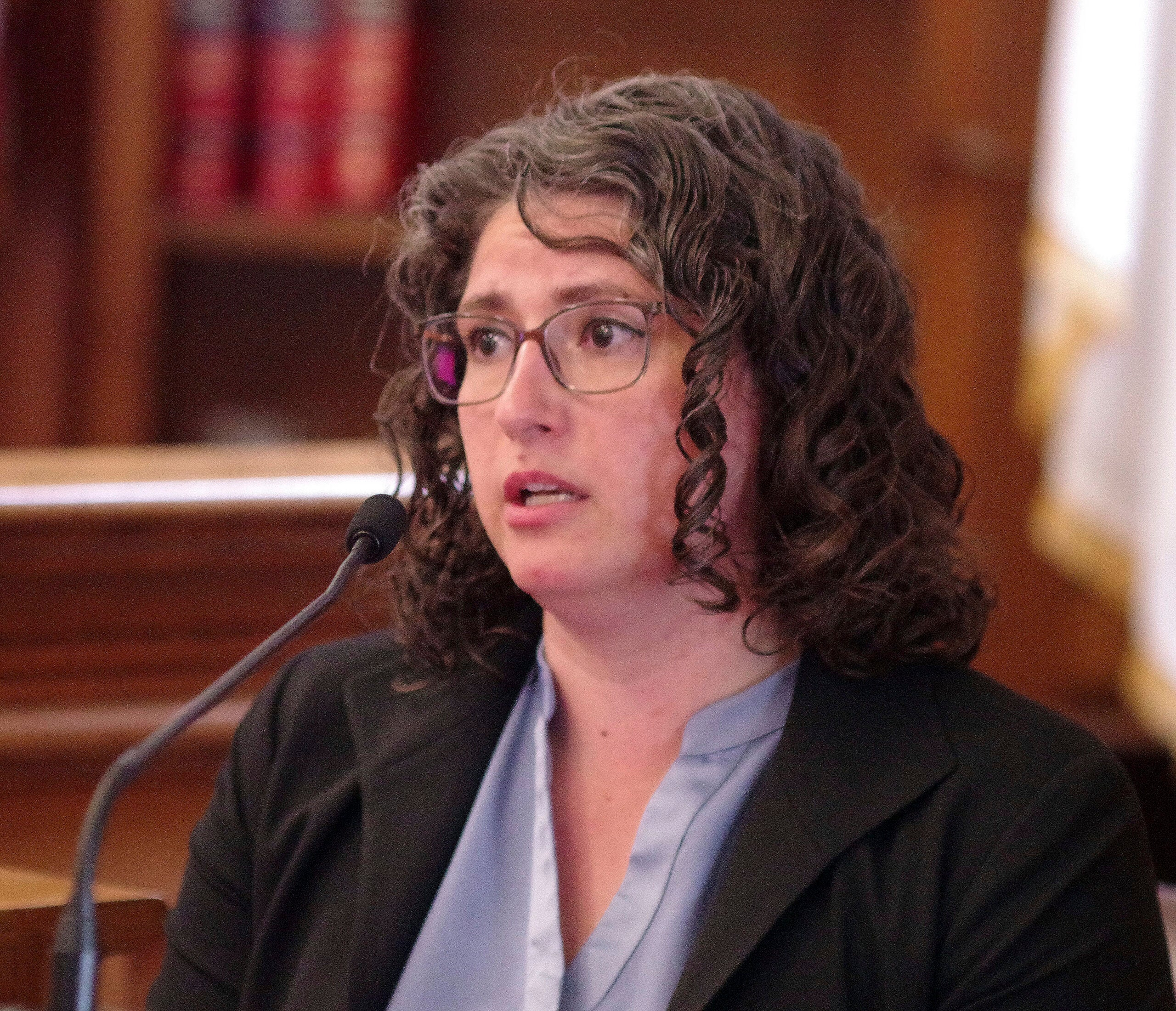
Forensic scientist Hannah Knowles testifying on May 2, 2025. We identify the testimony behind the serum conversion and retrospective estimate. This photograph is not a laboratory result or a measurement of blood-alcohol concentration at the earlier time; the assumptions and range remain in the record. - E27 / Witness testimony
Police contact with the Albert household
Witnesses described conversations with household occupants rather than a forensic search of the home.
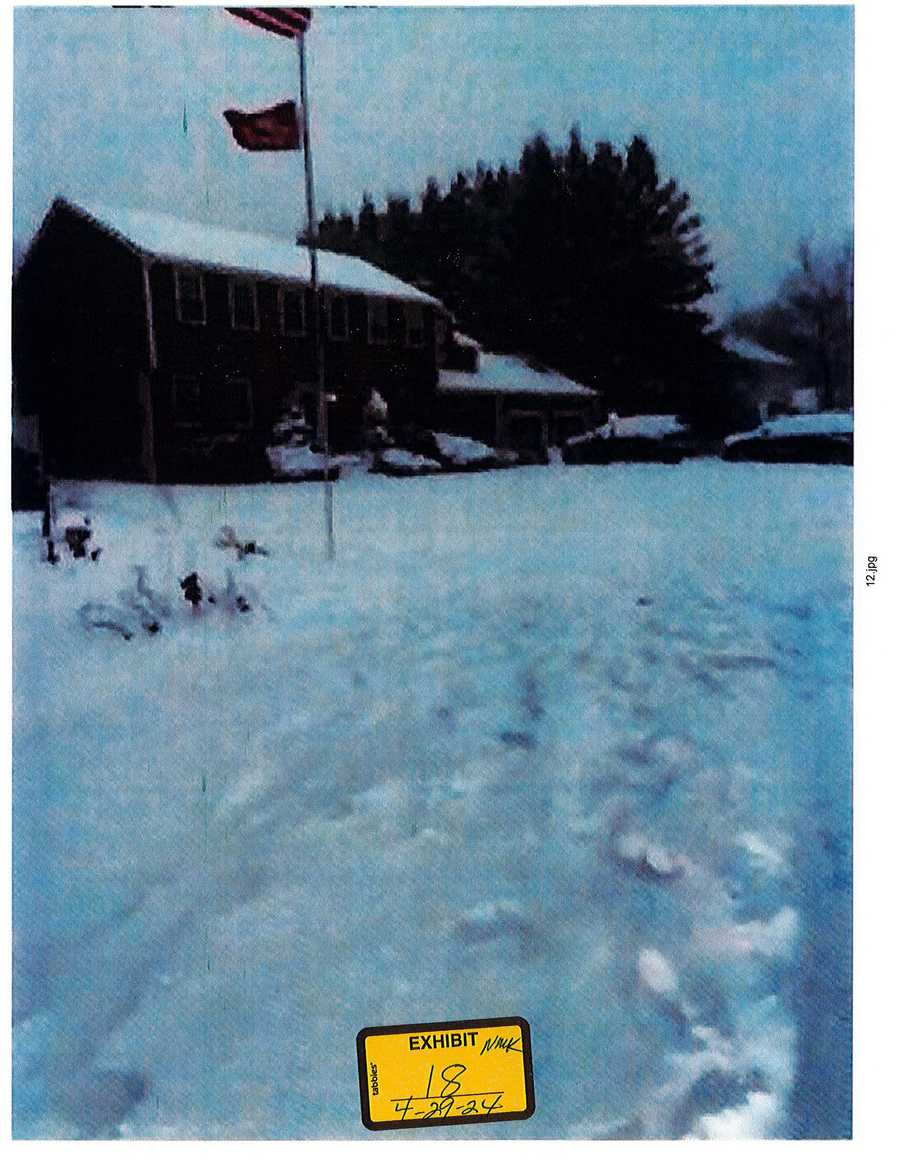
This photograph labeled 2024 exhibit 18 shows the snow-covered exterior and flagpole area in the trial collection. We use it for setting context only. It does not show police interviewing the household or establish what occurred inside, who entered, or whether the interior was searched. - E19 / Investigation testimony
The initial snow-covered scene search
Gallagher described clearing snow and collecting apparently bloodstained snow in plastic cups.
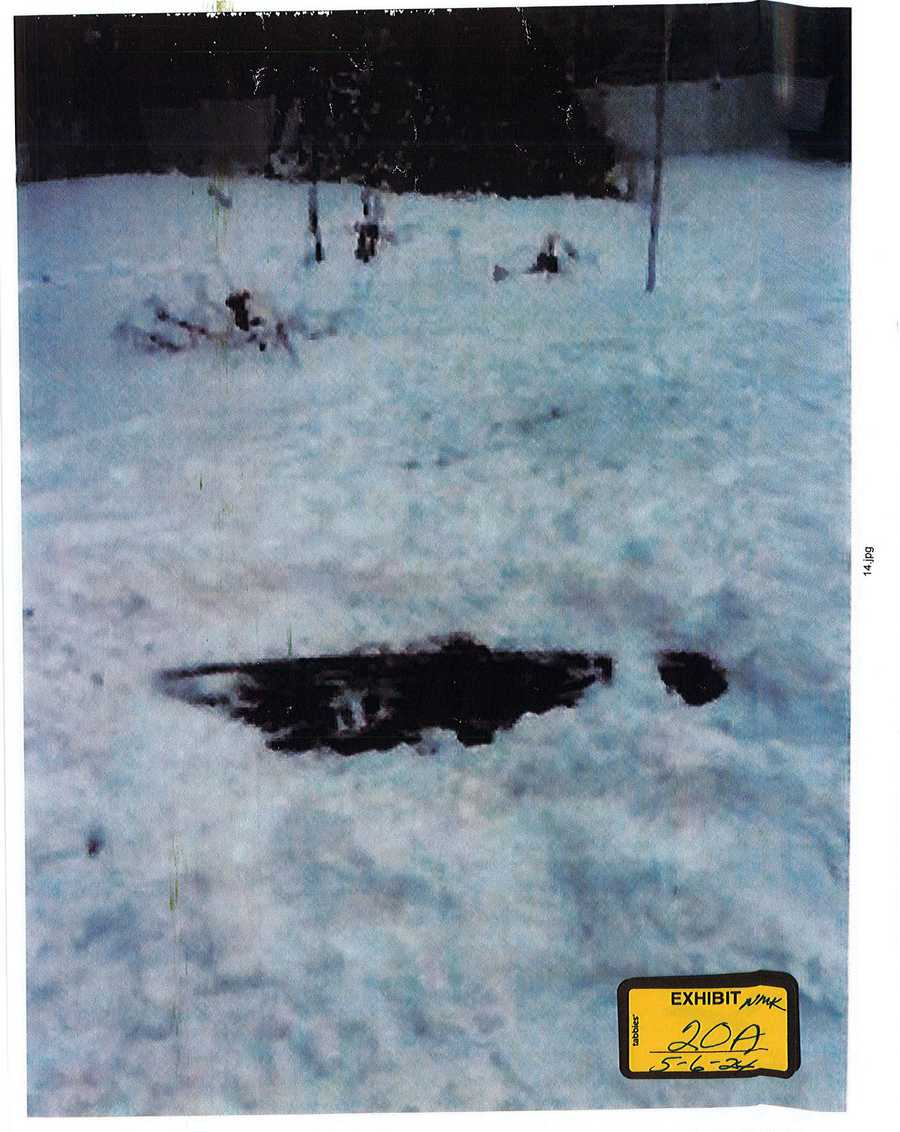
2024 exhibit 20A shows disturbed snow and an exposed patch of ground. We include the full photograph as scene context for the initial-search discussion. It does not date each disturbance, show the collection procedure, or independently establish which items were present before the search. - E09 / Disputed witness testimony
The taillight before towing
Witnesses described damage in Dighton before the Lexus was towed to Canton.
- E10 / Investigation testimony
The taillight recovery timeline
The Dighton observations, Canton arrival, and first SERT recovery, with our assessment of the sallyport planting allegation.
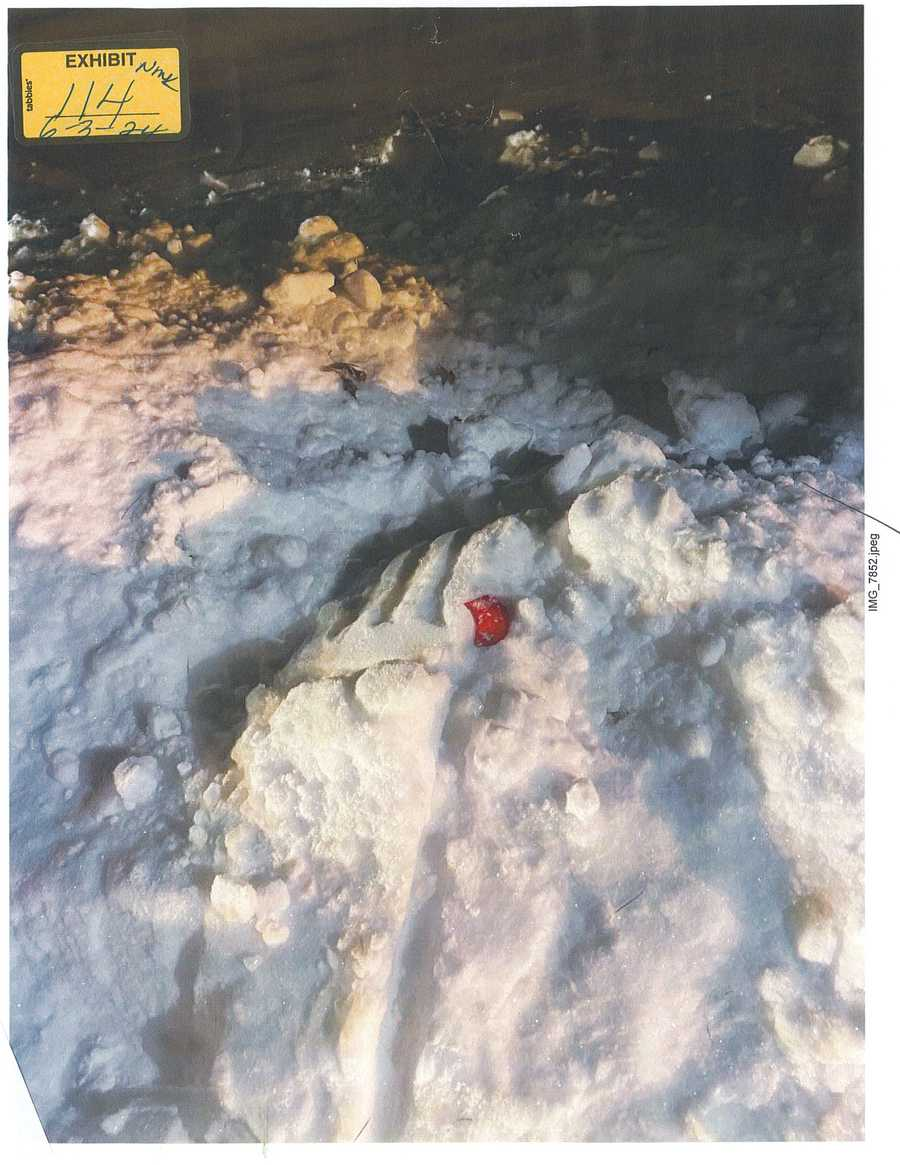
2024 exhibit 114 shows a red object in a snow-covered scene. We include it as visual context for the recovery discussion. The photograph is not a synchronized timestamp: it does not independently establish the first discovery time, the object's identity, or its earlier custody. - E29 / Video and witness testimony
Sallyport video orientation and custody testimony
The jury examined mirrored surveillance footage and a corrected orientation.
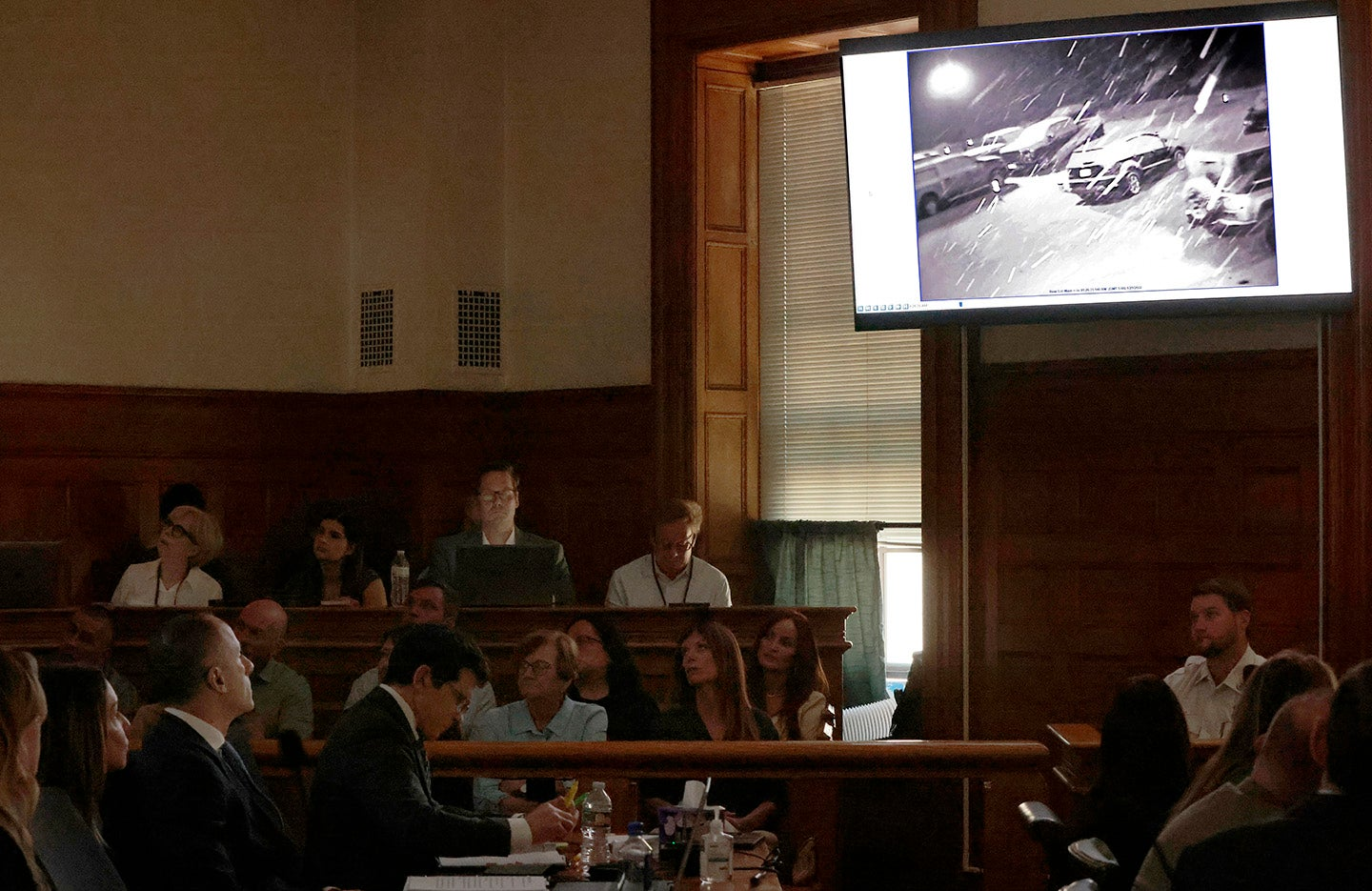
Courtroom photograph from May 12, 2025, showing footage identified by the source as the Canton Police Department parking lot on January 29, 2022. We distinguish this exterior camera view from the disputed sallyport view. It does not establish uninterrupted custody or resolve the interior video's orientation. - E28 / Witness testimony
Later searches and evidence-bag documentation
Additional material was recovered at Fairview after the initial SERT search.
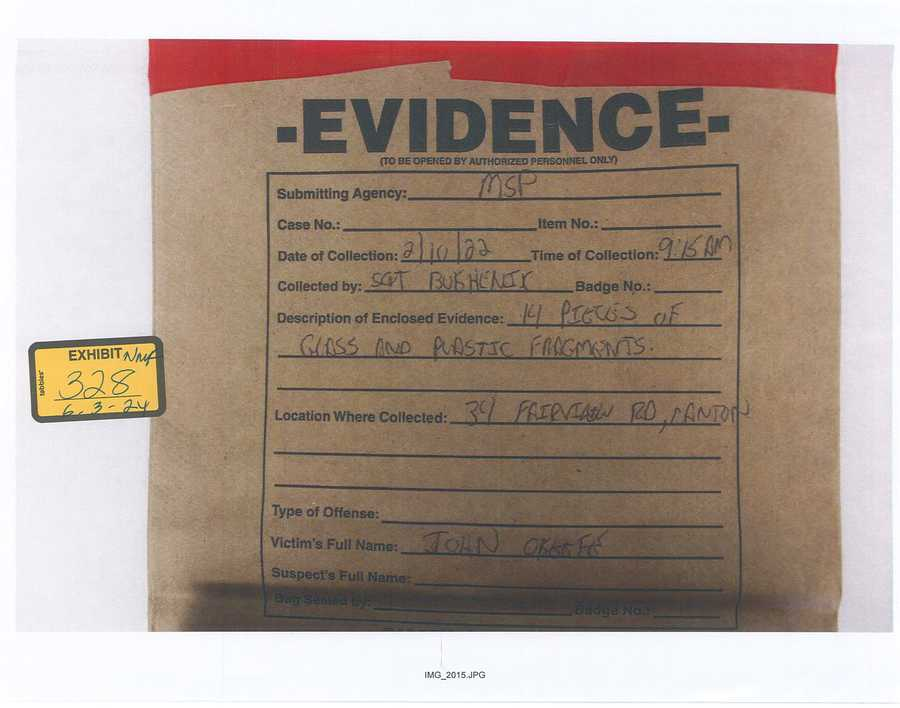
2024 exhibit 328 shows an evidence bag whose handwriting records a February 10, 2022 collection and describes glass and plastic fragments. We retain the annotations as documentation to examine. A bag label is not a continuous custody record or independent verification of the recovery account. - E32 / Witness testimony
Albert-family accounts and overnight calls
Family members described the gathering and denied seeing O'Keefe enter the house.
- E35 / Laboratory testimony
Animal-DNA testing of two clothing swabs
Kun reported no canine DNA and detected pig DNA in the submitted swabs.
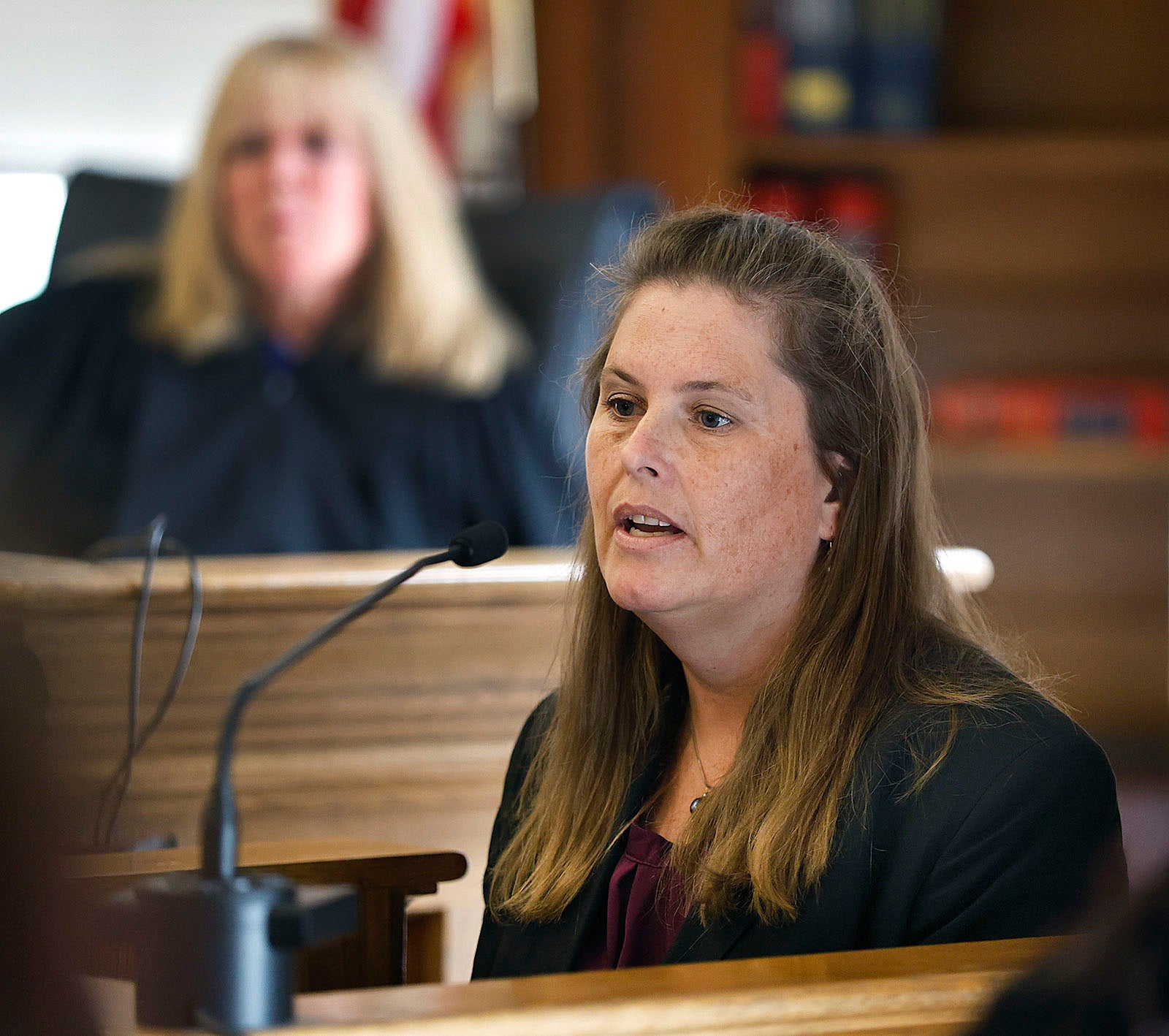
Teri Kun testifying in the first trial on May 15, 2024. We identify the testimony about the submitted clothing swabs. This photograph is not a DNA result and does not enlarge the scope of that testing to the wounds or the entire garment. - E31 / Witness testimony
Higgins: messages and telephone handling
Higgins was questioned about communications, movements, and disposal of a phone and SIM card.
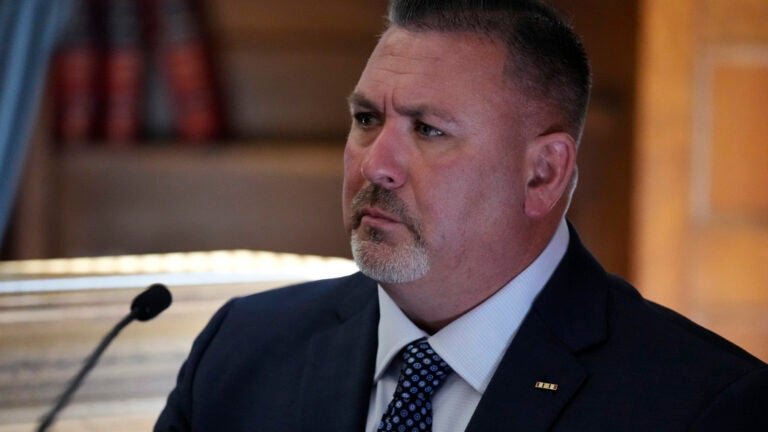
Brian Higgins testifying on May 24, 2024. We place this first-trial photograph with the account of his communications and telephone handling. It is not an image of an extracted message, the discarded phone, or proof of either side's account of its disposal. - E20 / Court outcome
The first trial ends in a mistrial
The first jury did not return a verdict. A mistrial was declared on July 1, 2024.
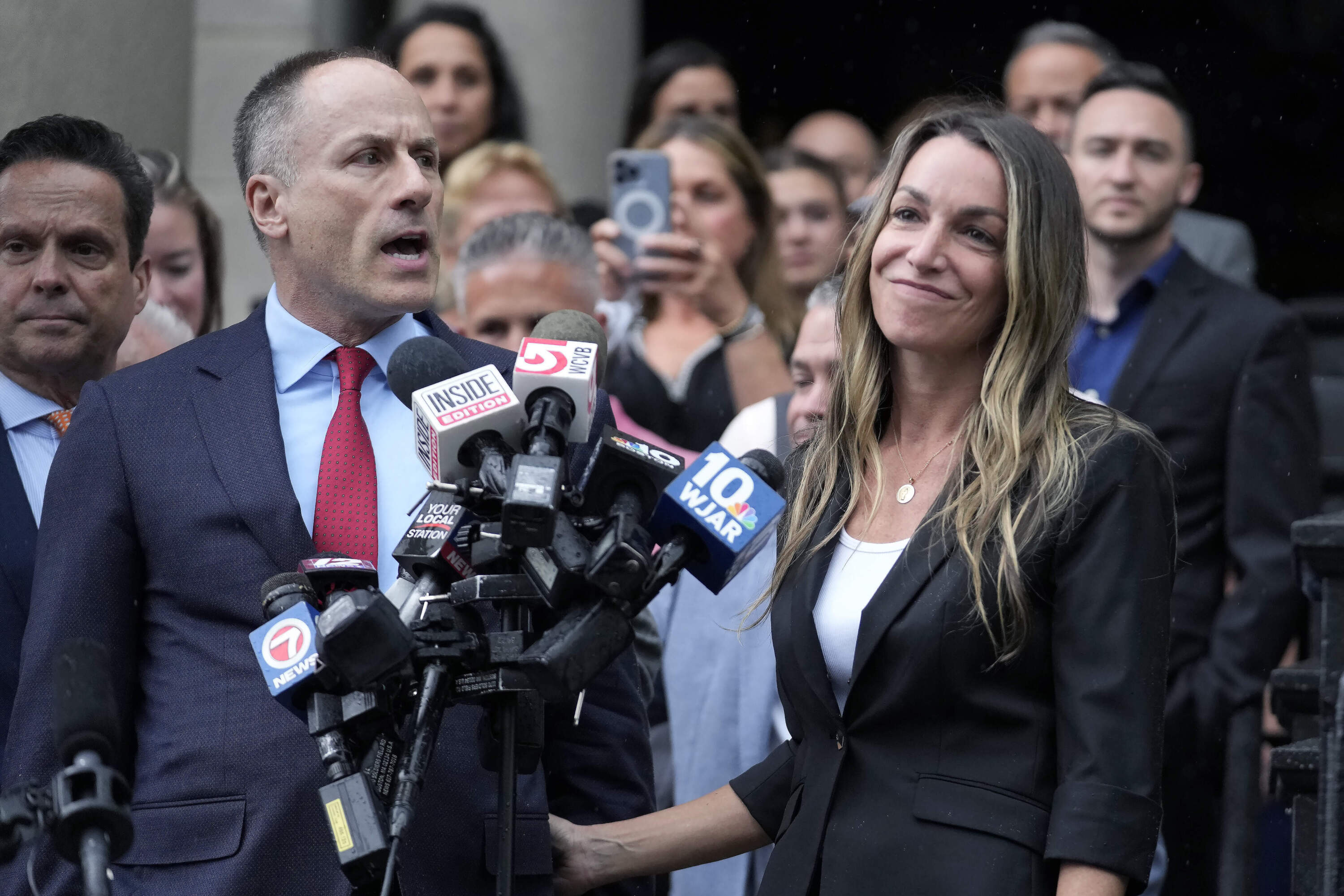
Karen Read and attorney David Yannetti outside court after the mistrial on July 1, 2024, as identified in WBUR's caption. We distinguish this procedural outcome from the verdict returned at the 2025 retrial; expressions in this photograph do not establish guilt or innocence. - E37 / Court outcome
The appellate decision allowing retrial
The Supreme Judicial Court allowed the case to proceed after the first mistrial.
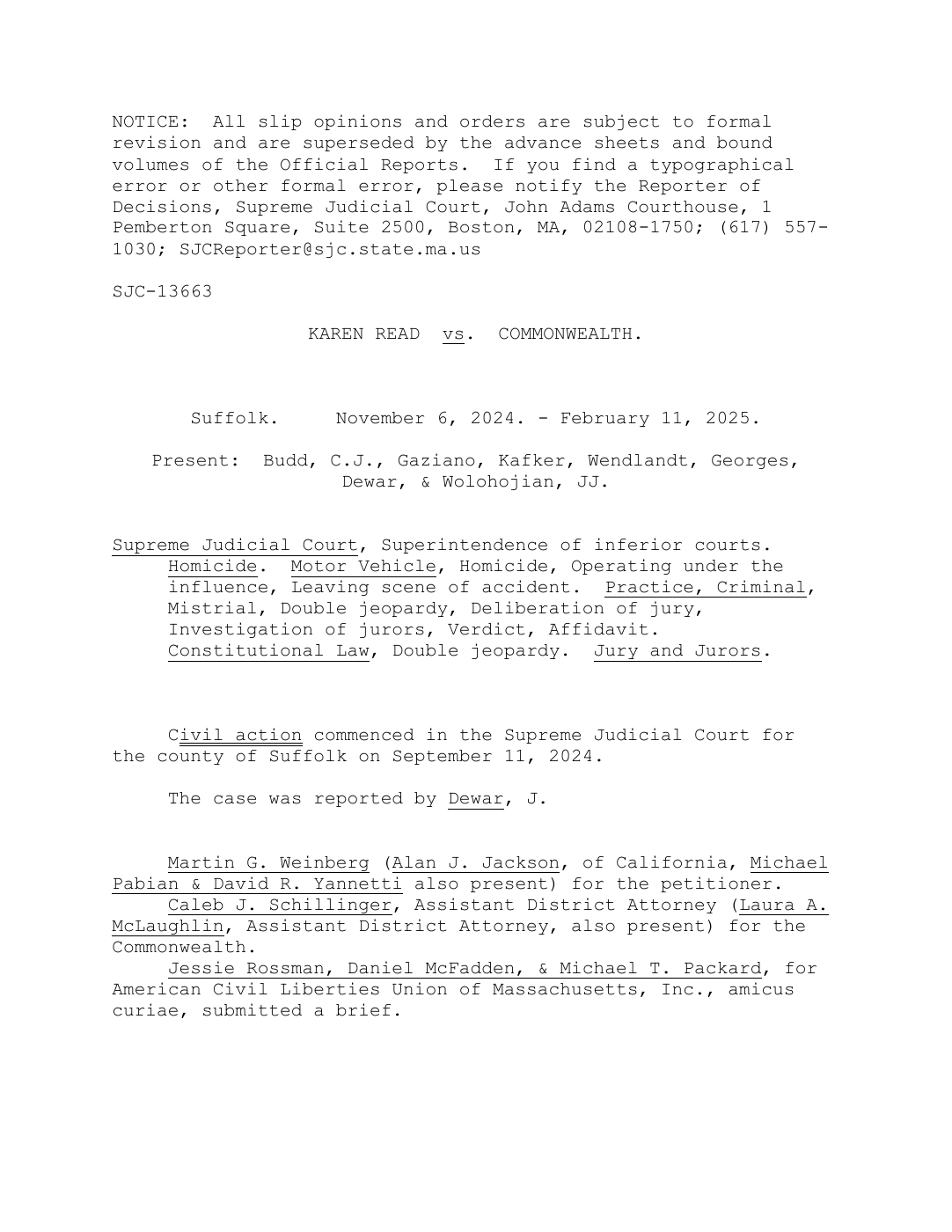
Cover page of Read v. Commonwealth, SJC-13663, decided February 11, 2025, from a publisher-hosted copy of the opinion. We link the complete decision for its reasoning. The cover identifies the proceeding and date; it is not a factual finding about the cause of O'Keefe's death. - E17 / Disputed expert interpretation
The disputed Safari search timestamp
Experts disagreed over the meaning of a 2:27 a.m. artifact associated with a later cold-survival search.
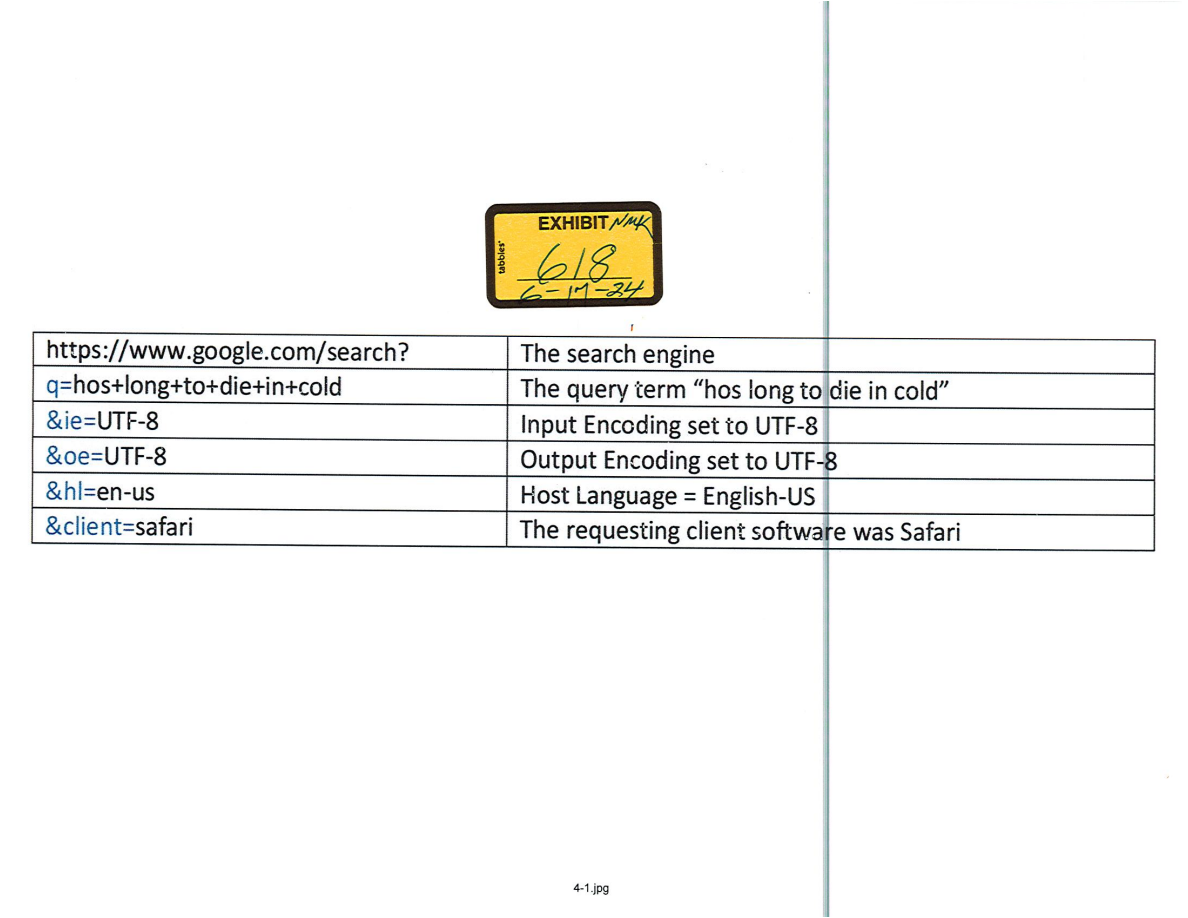
2024 exhibit 618 explains the components of a search URL. We use this earlier explanatory slide as context for interpreting browser artifacts. It contains no timestamp establishing when the search occurred and does not decide the competing timing interpretations summarized here. - E30 / Laboratory testimony
Vehicle and garment examination
Hartnett described collecting material, examining clothing, and testing sampled vehicle areas for blood.
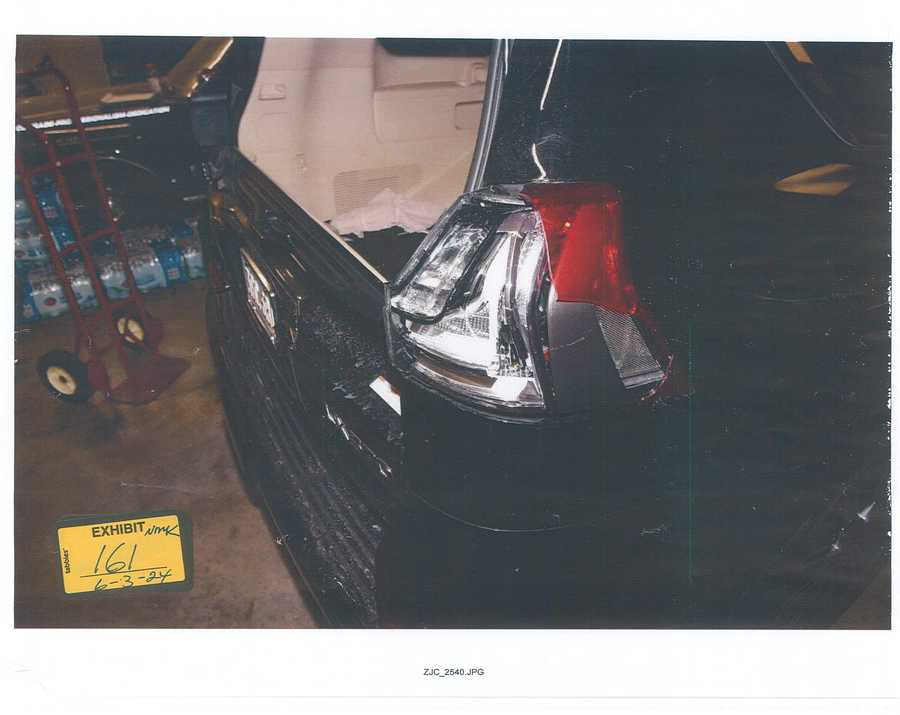
2024 exhibit 161 shows the damaged taillight on a vehicle inside a garage. It accompanies the examination record, not the pre-tow account. Neither this view nor the exhibit sticker dates when the damage occurred. - E11 / Laboratory testimony
The reconstructed taillight
Vallier described physical fits connecting recovered plastic to the damaged taillight.
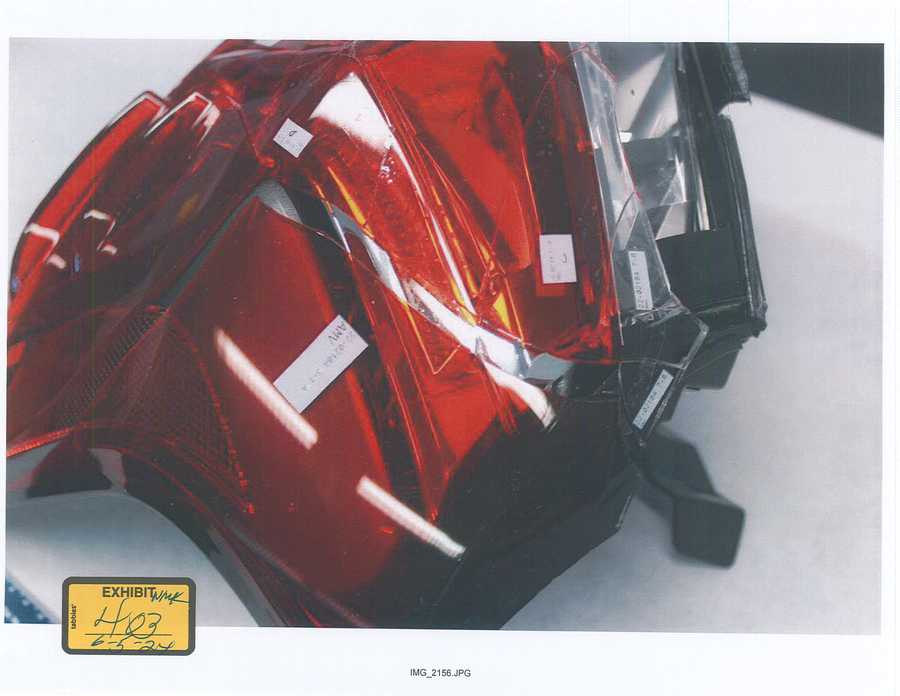
2024 exhibit 403 shows labeled lens sections arranged on a taillight housing. We use this view to explain the physical-fit discussion, alongside the separate view of the open region. The arrangement does not establish when the pieces broke or how they reached the recovery scene. - E34 / Recorded messages and testimony
Proctor's messages and their admission at the retrial
Messages were admitted through a recipient, with a limitation tied to the investigator's state of mind.
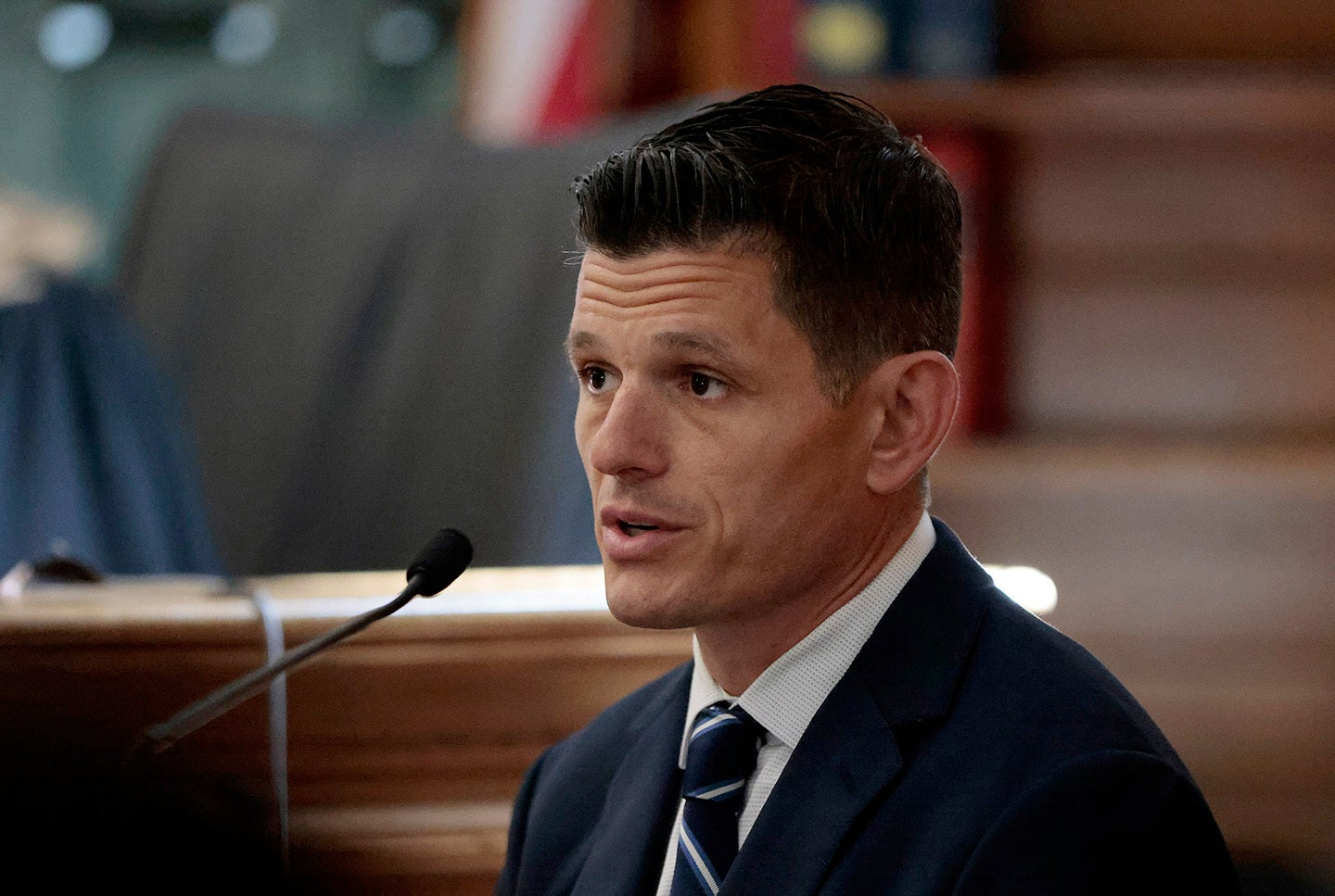
Jonathan Diamandis testifying on June 2, 2025. We distinguish his testimony about Proctor's messages from an original message record. This photograph contains no message text and does not independently establish evidence tampering or the absence of it. - E36 / Expert interpretation
Russell's opinion about the arm wounds
Russell attributed the arm-mark pattern to a dog; the prosecution challenged her analysis.
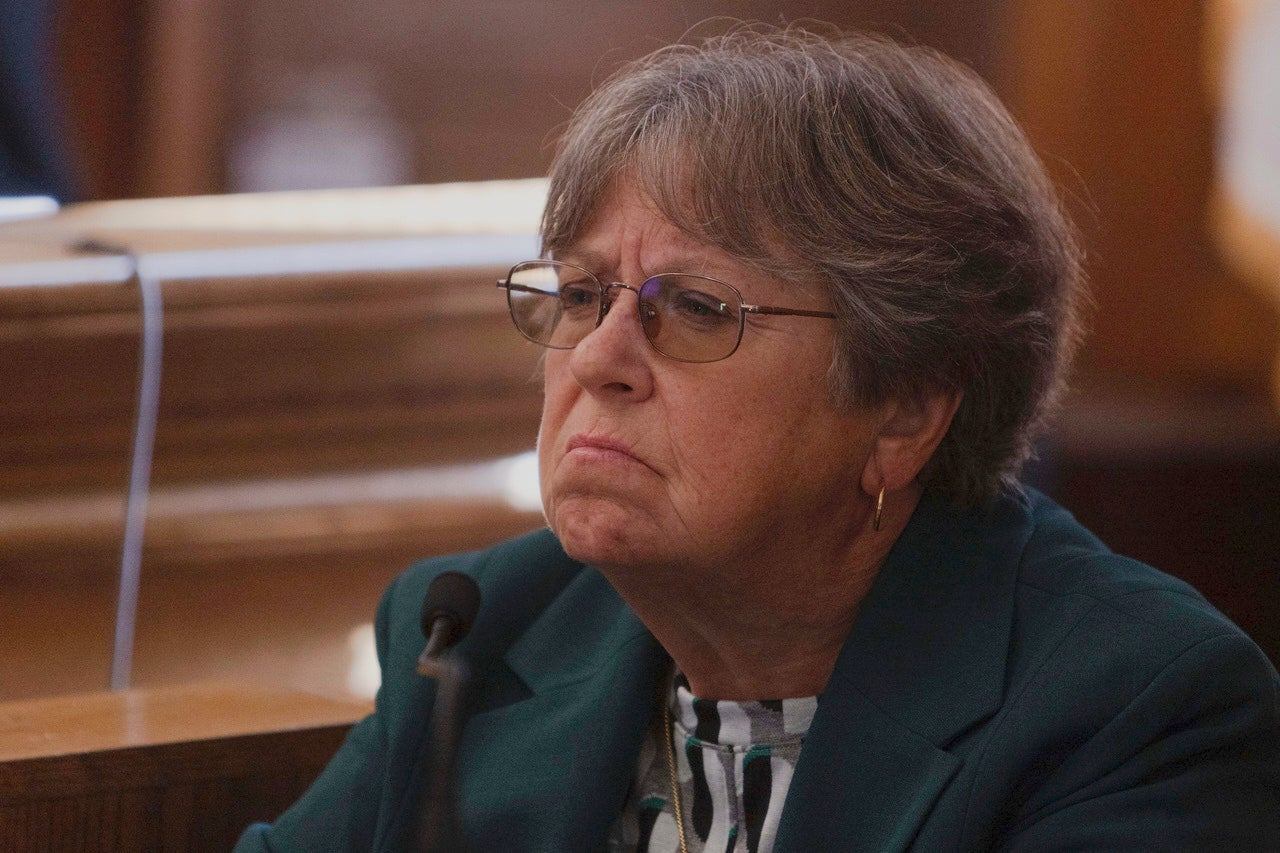
Dr. Marie Russell under questioning on June 3, 2025, following her opinion testimony the previous day. We use this later courtroom photograph alongside the account of her methods and cross-examination. It is not an injury photograph, a DNA finding, or proof of a particular animal or mechanism. - E40 / Expert interpretation
ARCCA test configurations and cross-examination
Wolfe described controlled tests; cross-examination examined how their conditions differed from a person.
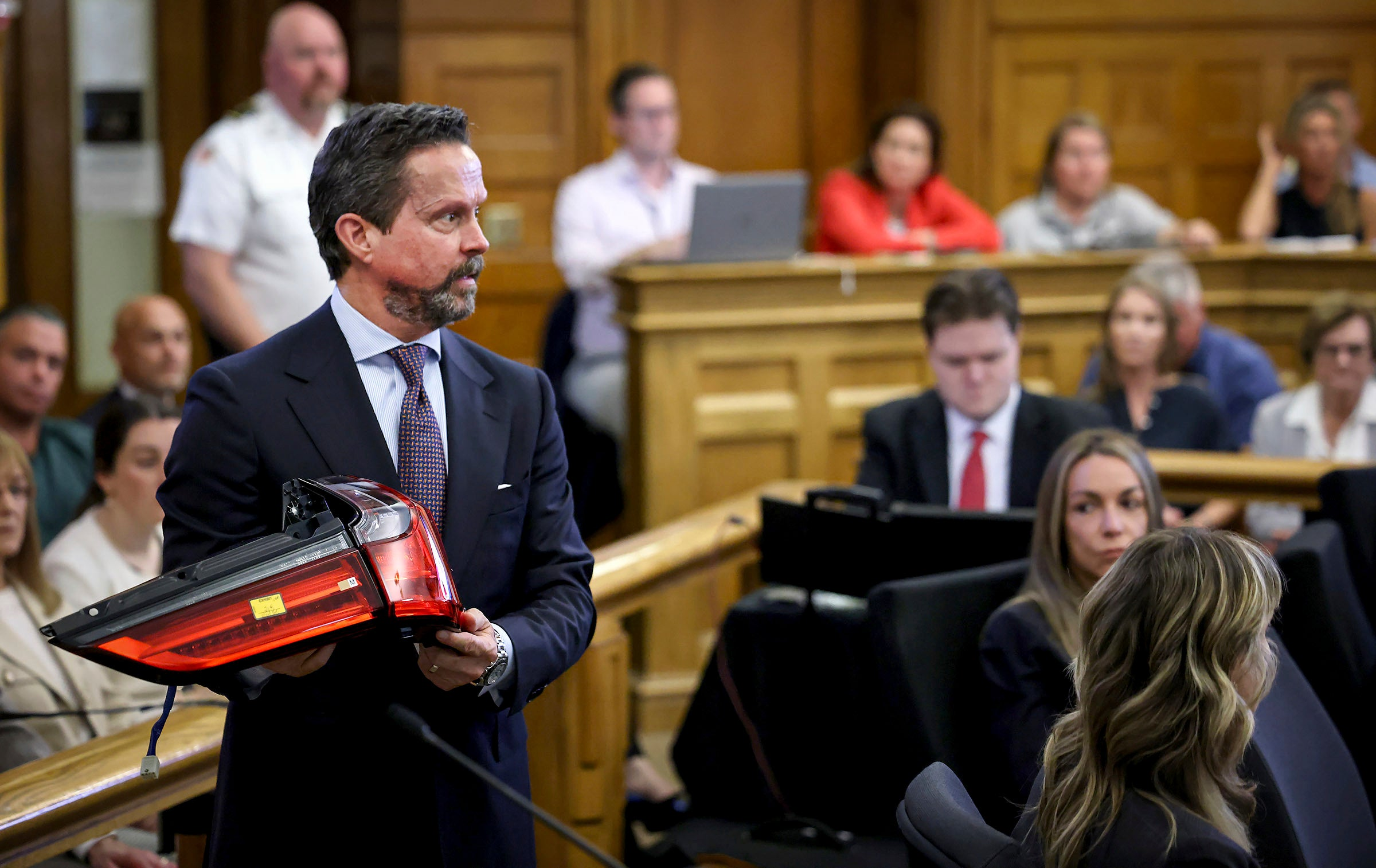
Alan Jackson holds an assembly identified by the source as a 2021 Lexus SUV taillight while questioning Daniel Wolfe on June 6, 2025. We distinguish this courtroom object from the test apparatus and the case vehicle's recovered assembly. The photograph does not establish the test configuration or validate its results. - E21 / Court outcome
The June 18, 2025 verdict
Read was acquitted of the death-related charges and convicted of operating under the influence.
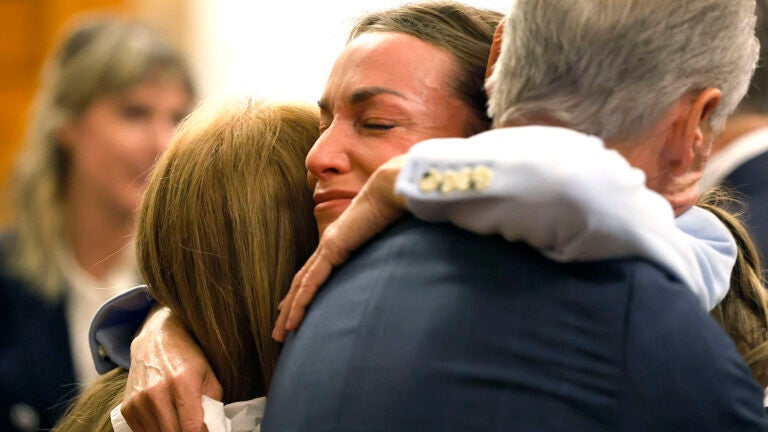
Karen Read embraces her parents after the June 18, 2025 verdict, according to the source caption. We use the photograph to mark the courtroom outcome. The returned verdicts, summarized in this record, are the basis for the legal result; a reaction photograph is not a verdict form.