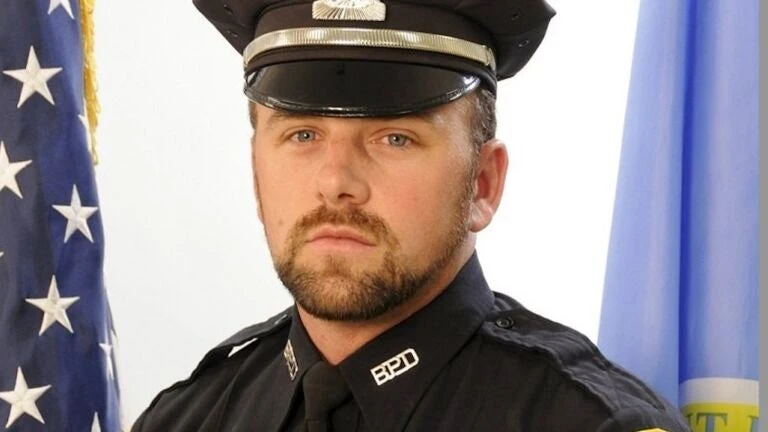
We believe John O'Keefe was struck by the Lexus SUV Karen Read was driving. This is our interpretation of the evidence, not an established account of the collision.
This is our assessment of the evidence. We explain the connections and the strongest objections.
Read was acquitted of the death-related charges and convicted of operating under the influence. Read the verdict.
Read why we hold this view ↗We examine defense arguments and broader inferences separately. Each heading is a paraphrase of the proposition being tested, not a quotation or a finding. The source account comes first; our reasoning is labeled. Missing evidence is not automatically evidence that an event could not happen.
These claim assessments cover the criminal trials through June 18, 2025. Later proceedings are covered separately in After the Verdict. These are selected assessments, not an exhaustive trial record. Most sources are trial reporting; a passage check does not authenticate original evidence. Several reports may describe the same testimony, and measurements from one phone are not independent witnesses. Rejecting a proposed cover-up mechanism does not establish a collision or guilt.
Three flights of stairs establish that John entered the house
Inference tested in the phone-data dispute; the heading is our formulation, not a quotation from a witness.
Why the claim is raised
Stair activity has been used to argue that O'Keefe moved inside the house.
Strongest evidence or missing support
Whiffin attributed the stair entries to elevation changes during vehicle travel before arrival, separately from the final recorded steps.
Our reasoning
We find that explanation a substantial challenge to treating a stair count as proof of indoor movement. A sensor classification needs location and timing context.
Limits and strongest remaining objection
This does not prove the phone remained outside afterward. Cross-examination identified unreliable location data and a radius encompassing the house. We cannot turn the later activity gap or battery cooling into continuous surveillance of John.
Missing Ring footage establishes that Read deleted it
A counterclaim tested by the same standard; this is not presented as a defense argument.
Why the claim is raised
Missing footage has prompted questions about account access and deletion.
Strongest evidence or missing support
Bukhenik testified that Ring supplied no evidence documenting Read accessing the account.
Our reasoning
We do not assign a deliberate deletion to someone solely because a recording is unavailable. The same distinction applies to missing material associated with other people.
Limits and strongest remaining objection
A gap alone establishes neither its cause nor the responsible person. The absence of an access record in this account does not prove that every possible form of access was impossible.
Proctor took fragments at the sallyport and planted the first SERT find
A specific planting scenario tested here; broader custody objections are distinct.
Why the claim is raised
The vehicle's arrival and the first reported SERT discovery were close in time, prompting questions about access and transfer.
Strongest evidence or missing support
Bukhenik's account places the investigators at the station at the first discovery and denies a detour or handoff. Barros had already observed taillight damage before towing.
Our reasoning
We find this narrower scenario unpersuasive on the available account: it requires an unestablished transfer, not just proximity in time.
Limits and strongest remaining objection
This relies on witness accounts and disputed clock alignment. Custody started earlier. Barros described greater damage in a later photograph. Earlier access and later recoveries require their own assessment; physical fits alone do not establish when fragments were deposited.
The 2:27 a.m. timestamp establishes an early cold-survival search
Defense expert interpretation at the first trial; disputed by retrial experts. Paraphrase, not a quotation.
Why the claim is raised
Green placed the query at or before 2:27 a.m. Hyde and Whiffin disagreed with that reading.
Strongest evidence or missing support
Hyde and Whiffin placed the search at 6:24 a.m. Whiffin's tests demonstrate an older tab-focus time paired with a later page URL.
Our reasoning
We give the explanation of the artifact's behavior more weight than reading its timestamp as the search time without that context.
Limits and strongest remaining objection
Hyde could not definitively explain the precise 2:27:40 value in her report. We have not independently examined the extraction; Green's disagreement remains part of the record.
A deleted label means McCabe manually erased this search
Disputed forensic interpretation associated with the search artifact; not a claim about every deletion on the phone.
Why the claim is raised
Green characterized the artifact as deleted in the first trial.
Strongest evidence or missing support
Hyde testified that this search was not manually deleted. Temporary database records and forensic software labels do not by themselves establish a user's action.
Our reasoning
We do not treat a software label as proof of deliberate concealment. The examiner must establish what produced that artifact.
Limits and strongest remaining objection
This assessment concerns this search only. It does not establish that no messages, calls or other information were deleted.
Mirrored sallyport footage establishes deliberate concealment
Inference from the video presentation, distinct from the established orientation problem.
Why the claim is raised
The mirrored image can mislead a viewer about which side of the SUV is visible.
Strongest evidence or missing support
Bukhenik testified that other town cameras also produced inverted images. Mirroring alone does not identify deliberate alteration or a planting act.
Our reasoning
We separate a presentation defect from an allegation about its purpose. We would need evidence connecting the orientation or handling of the video to concealment.
Limits and strongest remaining objection
The witness's explanation is not independent authentication. Blind spots, missing intervals and handling remain separate questions; correcting orientation does not resolve them.
Discarded phones and overnight calls establish a coordinated cover-up
Inference raised by the phone-preservation and communication disputes; no conversation is reconstructed here.
Why the claim is raised
Higgins acknowledged discarding a phone; Albert described a trade-in. Overnight calls and the explanations for them were challenged.
Strongest evidence or missing support
Those facts do not reveal an agreement or the contents of an alleged conversation. A preservation problem is not itself proof of a particular crime.
Our reasoning
We regard the missing opportunity to verify data as a legitimate investigative concern. We do not fill that gap with an invented conversation.
Limits and strongest remaining objection
The witnesses' explanations do not settle the concern either. An exact disposal/order chronology requires separating issuance, notification, disposal and retained records. We do not infer coordination solely from timing.
Selling the house or rehoming the dog establishes concealment
Inference from later household decisions; motive is not established by the actions alone.
Why the claim is raised
The sale and rehoming have been linked to questions about evidence that investigators could no longer examine in its original setting.
Strongest evidence or missing support
Nicole Albert described prior downsizing plans and a later dog incident preceding rehoming. These are alternative accounts, not independently verified motives.
Our reasoning
We cannot infer an evidence-destruction purpose from the decisions alone. An accusation requires a link between the act and the evidence allegedly concealed.
Limits and strongest remaining objection
The original house was not forensically searched, a real investigative limitation. The household's explanations do not independently settle motive. Basement-renovation details are not established by this review.
The snowplow account and Ford Edge establish a later body placement
Loughran's observations followed by an inference; he did not report witnessing a body transfer.
Why the claim is raised
Loughran described seeing no body on an earlier pass and a Ford Edge around 3:30 a.m.
Strongest evidence or missing support
The cited account does not identify occupants or establish a transfer. His recollection and observations were challenged on cross-examination.
Our reasoning
We distinguish failure to observe something from proof that it was absent. The vehicle account does not supply the missing transfer evidence.
Limits and strongest remaining objection
His account is a material challenge and cannot simply be dismissed. Visibility, route and memory affect its weight; this review does not independently reconstruct what he could see.
Proctor's misconduct establishes that he planted evidence
Inference from documented misconduct to a specific unproved act.
Why the claim is raised
Proctor's inappropriate communications and disciplinary firing raise legitimate questions about credibility and investigative reliability.
Strongest evidence or missing support
Those findings do not themselves identify an act of planting. A specific allegation still needs evidence of access, transfer, alteration or a false recovery account.
Our reasoning
We condemn the misconduct and scrutinize the investigation. We do not treat bad conduct as a substitute for establishing how a particular item was planted.
Limits and strongest remaining objection
This is not blanket exoneration. An absence of confession proves little, and circumstantial evidence can matter. Each custody problem needs its own assessment.
The arm injuries establish a dog attack inside the house
A defense medical explanation, with an additional inference about location.
Why the claim is raised
Russell favored a dog-related explanation for the arm injuries.
Strongest evidence or missing support
Kun found no canine DNA on two submitted clothing swabs. A contrary medical opinion discussed during cross-examination considered an animal bite unlikely while describing the wounds as nonspecific.
Our reasoning
We do not find the wound pattern sufficient to establish a dog, an attacker or an indoor location. The negative testing is relevant, but its scope matters.
Limits and strongest remaining objection
Two clothing swabs are not comprehensive wound testing. The negative result cannot conclusively exclude a dog encounter, and rejecting that explanation does not establish a vehicle strike.
ARCCA's federal involvement establishes an official cover-up finding
Broader inference about agency conclusions, distinct from ARCCA's actual expert opinions.
Why the claim is raised
ARCCA's initial work was federally commissioned. Its experts offered substantial opinions challenging a vehicle-strike explanation.
Strongest evidence or missing support
Federal retention is not an agency finding about another crime. Collision analysis does not identify a person who planted evidence or establish a coordinated cover-up.
Our reasoning
We evaluate the experts' conclusions on their methods and evidence, not on an implied agency endorsement of a different theory.
Limits and strongest remaining objection
Rentschler's injury and motion opinions remain a serious challenge to a vehicle strike. Distinguishing them from an agency finding does not answer the biomechanics. Later defense funding also does not invalidate the work.